Traditional vs. Cloud POS: Which Is Right for Your Restaurant?
Introduction
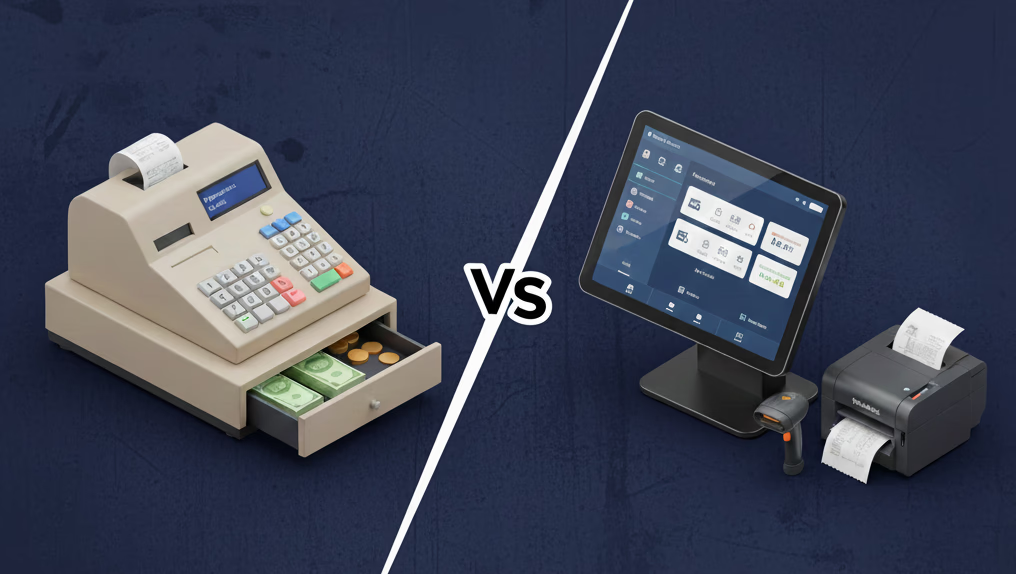
For decades, restaurants across Nepal have relied on traditional, on-premise POS systems — a single terminal, a local server, and a lot of manual work. But as the industry evolves with QR menus, online delivery, and multi-branch operations, more restaurant owners are asking: is it time to switch to a cloud-based POS?
Here's a clear, practical comparison to help you decide and where a modern solution like Yummy POS fits into the picture.
1. Accessibility
Traditional POS: Data and reports are stored on a local server. You can only check sales, inventory, or staff performance from the restaurant itself.
Cloud POS: Access your dashboard from anywhere — check today's sales from home, review last month's performance while traveling, or manage multiple branches from a single phone.
2. Setup & Hardware Costs
Traditional POS: Requires expensive dedicated hardware, on-site installation, and ongoing maintenance from technicians.
Cloud POS: Works on affordable tablets or existing devices, with lower upfront costs and faster setup — often within a day.
3. Software Updates
Traditional POS: Updates are manual, infrequent, and sometimes require a technician visit — leaving security gaps and outdated features.
Cloud POS: Updates happen automatically in the background, so you always have the latest features and security patches without lifting a finger.
4. Multi-Branch Management
Traditional POS: Each outlet operates in isolation. Comparing performance across branches means manually collecting reports from each location.
Cloud POS: All branches sync to one central dashboard, giving you real-time, side-by-side comparisons of sales, inventory, and staff performance.
5. Data Backup & Security
Traditional POS: If your local server crashes or hardware fails, you risk losing months of sales and customer data permanently.
Cloud POS: Data is automatically backed up to secure servers, so your business information stays safe even if a device is lost, stolen, or damaged.
6. Integration with Modern Tools
Traditional POS: Rarely integrates with delivery apps like Foodmandu or Pathao, digital wallets like eSewa and Khalti, or online ordering systems.
Cloud POS: Built to connect seamlessly with the tools Nepali restaurants use every day — delivery platforms, digital payments, and QR ordering — all from one system. Yummy POS, for example, is designed specifically around these local workflows, so restaurants don't have to juggle separate apps for orders, payments, and delivery.
7. Cost Over Time
Traditional POS: Lower recurring cost, but higher upfront investment and expensive repairs or upgrades down the line.
Cloud POS: Predictable monthly subscription with no surprise repair bills, and the flexibility to scale as your restaurant grows.
Which One Is Right for You?
If you run a single, small outlet with a stable routine and no plans to expand, a traditional POS may still get the job done. But for restaurants looking to grow, manage multiple locations, or simply run things more efficiently, cloud POS offers the flexibility, security, and real-time visibility that traditional systems simply can't match.
As Nepal's restaurant industry continues to modernize, more owners are making the switch — not because it's a trend, but because it solves real, everyday problems.
Curious what Yummy POS could do for your restaurant? Book a free demo and see it in action.